

We’re glad you’re here.
Welcome to The Timekeeper Stay & Gardens.
Step through the doors of 323 West Gregory Street, and you’re stepping into more than just a home – you’re stepping through time.
The Roots of the Property
The Moreno Family Residence, Circa 1866
In 1870, this one-and-a-half-story home with dormer windows was the residence of James and Clara (Dorr) Moreno, members of one of Pensacola’s founding families. James Moreno, a businessman and Vice Consul for Mexico, represented Mexico’s shipping interests at the Port of Pensacola and may have built the home as early as 1866.
Here they raised four children, alongside Clara’s mother, Sarah Dorr, and her brother, James W. Dorr.
Their daughter, Violette Moreno, carried forward the family’s spirit of enterprise and creativity. She operated a popular florist business from the property, filling the gardens with rare trees and ornamental plants — including the ginkgo tree that still stands today. Each year, from late fall to early January, the grounds bloomed white with narcissus, drawing visitors from across the city.
The Lindenstruth Legacy
A family with devotion to time itself ushers in a new era.
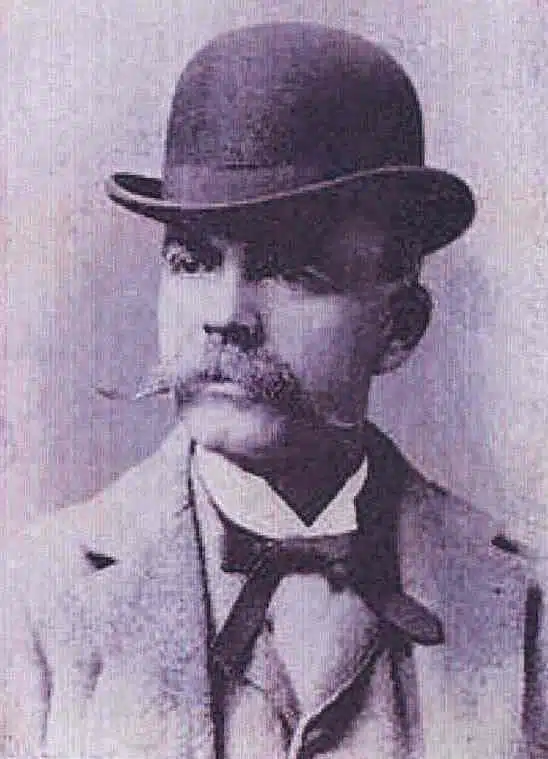
In 1890, Peter Lindenstruth became the dedicated caretaker of the Escambia County Courthouse clock, carefully tending it for decades. The clock had been conceived and largely funded by Captain William Folker of Nova Scotia, whose $15,000 lottery winnings made it possible.
By 1899, Peter’s daughter Bessie had joined him in business. Together, they built Lindenstruth Jewelry on Palafox Street into Pensacola’s leading jewelry store, offering watches, diamonds, fine jewelry, china, sterling silver, and gifts. Customers could custom-select watch cases, faces, and movements — and Bessie was known to personally bring diamonds to clients’ homes for private selection.
In 1917, Peter purchased the Gregory Street property, beginning a new chapter for the estate.
A Social and Civic Hub
The Gregory Street home becomes a center of culture and community.
Bessie transformed the Gregory Street home into a two-story, twelve-room residence that quickly became a social center for friends from near and far. One of the first events held there was a wedding.
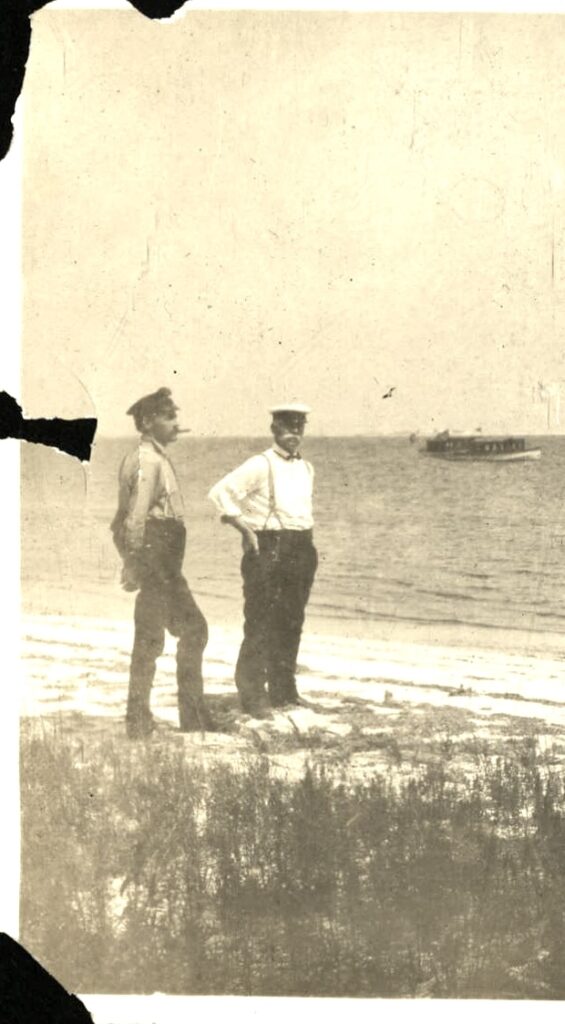
The home welcomed Navy officers, ship captains, and seasonal guests. Luncheons, suppers, holiday fetes, club gatherings, beach picnics, and yacht club regattas filled the calendar. Bessie also expanded the property, building additional homes and a beloved gazebo she called the “Summer House.”
Both Peter and Bessie were deeply engaged in civic life. Peter was a charter member of the Pensacola Yacht Club. Bessie helped found the Pensacola Historical Society, served in the Music Club, and was program chair of the Pensacola Woman’s Club during the height of the national women’s club movement. Together, they supported fundraising efforts for servicemen and children in need.
Saving Pensacola’s Timepiece
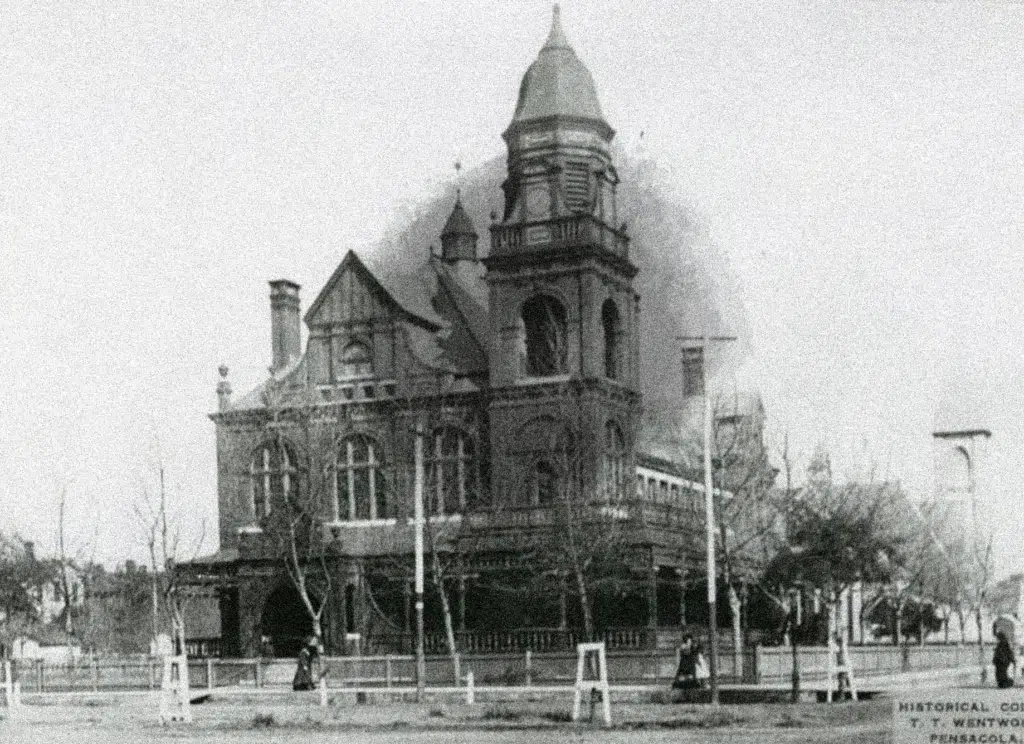
The Lindenstruth family saved Pensacola’s historic courthouse clock three times.
In 1925, when county commissioners threatened to replace it with an electric clock, Bessie’s impassioned newspaper article preserved it. In 1937, when the old courthouse was demolished, she arranged through an Act of Congress for ownership of the clock to transfer to the historical society.
The city stored it — until Bessie’s niece rescued it once again in the 1960s when it was nearly given away.
Today, the historic timepiece stands in its own tower at Palafox and Government Streets, outside the old Customs House/Court House — a lasting symbol of dedication to preservation.

The Timekeeper Today
Restored with purpose, the estate carries forward generations of Pensacola history.
Bessie left the property to her niece, Meta Lois (Diffenderfer) White, author of Leta Loyce: Memoirs of Pensacola, which chronicles the city between the World Wars. Meta and her husband raised their family here in the 1950s and 1960s.
The house later sat boarded up for decades — a time capsule waiting to be restored.
Today, The Timekeeper honors the Lindenstruth family and the generations who lived, worked, and dreamed here — from the Moreno and Dorr families to Violette’s horticultural vision and the craftsmanship and civic devotion of Peter and Bessie.
The homes, gardens, and historic ginkgo tree remain as living reminders of those who walked these grounds — and of a continued commitment to preserving their stories.